Safer Property
By avoiding lopping, you prevent the growth of weak, dangerous branches that fail during summer storms.
Looking to reduce the height or size of your trees? We provide safe, AS4373-compliant alternatives to harmful lopping.
Providing expert canopy management across Albany Creek and the Hills District
While many people search for tree lopping Albany Creek when they want to reduce a tree's size, standard lopping is highly destructive. We offer professional canopy management that achieves your goals without destroying the tree.
In Albany Creek, mature natives like eucalypts respond terribly to lopping, often dropping heavy, dead limbs years later. We protect local properties by using correct arboricultural pruning instead.
By avoiding lopping, you prevent the growth of weak, dangerous branches that fail during summer storms.
Lopped trees require constant, expensive maintenance or premature removal. Doing it right the first time saves cash.
Your trees will look natural and balanced, rather than like ugly, hacked coat racks.
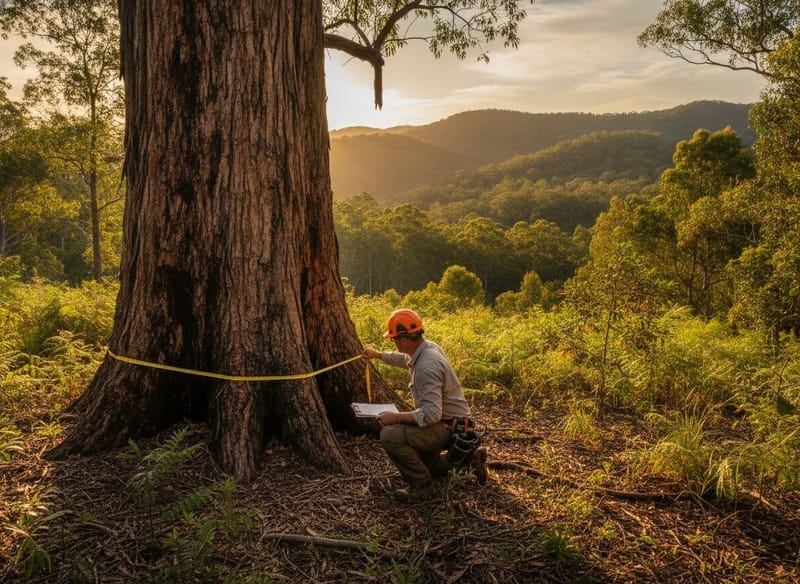
We listen to why you want the tree 'lopped' (e.g., too much shade, touching the roof).
We explain the best AS4373-compliant method to achieve your goal, or recommend removal.
We provide a transparent quote for the pruning or removal work.
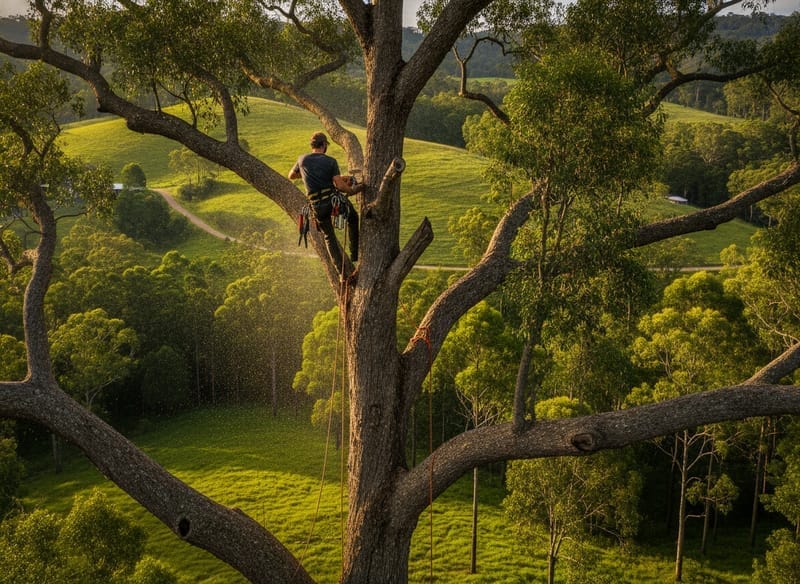
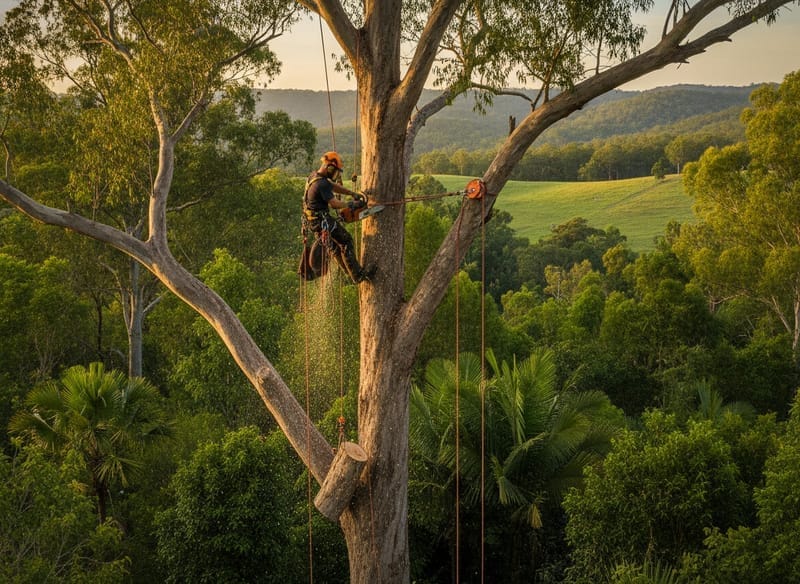
Our climbers carefully reduce the canopy using proper cuts that promote healing.
We process all green waste through our chipper and leave the yard spotless.
Welcome to Hills District Arborist. If you are searching for professional Tree Lopping Albany Creek, you have likely realised that a large tree on your property has outgrown its space, is blocking light, or is posing a risk over your roof. Albany Creek is known for its beautiful, established acreage and leafy suburban canopy, but living among large native species requires active, professional management.
Many homeowners ask us to "lop" a tree to reduce its height or clear property boundaries. As qualified local arborists, our team understands that what you really want is the tree made smaller and safer. We achieve this outcome using proper, science-backed canopy reduction techniques that protect the health of your tree while giving you back your space and peace of mind.
Whether you are managing a dominant flooded gum, clearing a fence line, or dealing with storm season preparations across the Hills District, we have the trucks, the climbers, and the local knowledge to handle it safely and effectively.
The biggest issue in our industry is under-qualified operators performing old-school topping cuts. True "lopping"—hacking off the top of a tree and leaving large, flat stubs—is heavily discouraged under Australian Standard AS4373. When a tree is topped by an amateur, it doesn't solve your problem; it creates a much worse one. Those large stubs struggle to heal, introducing rot and decay straight into the main trunk. Worse, the tree panics and pushes out "epicormic" shoots. This rapid, spindly regrowth is weakly attached to the decaying stub. Within a few years, you are left with a dangerous, top-heavy tree that is highly prone to snapping during our severe Queensland summer storms. Our solution is professional canopy management. When you contact us for Tree Lopping Albany Creek, we assess exactly what outcome you need—whether that is more light, roof clearance, or risk reduction. We then use AS4373-compliant techniques like target pruning and crown reduction. We cut back to established branch collars, allowing the tree to heal naturally. This gives you the smaller, safer tree you want, without creating a future hazard on your property.
When assessing your property, our climbers apply specific techniques to achieve the size reduction you need while maintaining the structural integrity of the tree.
This is the correct arboricultural approach when a tree needs to be made overall smaller. We carefully reduce the height and spread by pruning branches back to structural lateral nodes, removing no more than 25–30% of the live canopy to ensure the tree recovers safely.
Often requested when lower branches are obstructing driveways, footpaths, or under-canopy views. Our climbers selectively remove the lowest branches back to the trunk collar, lifting the canopy floor while keeping the upper crown intact.
If your primary goal is stopping branches from dropping leaves into gutters or rubbing against your roof, we perform targeted directional pruning. This removes the specific problem limbs without altering the natural shape and balance of the rest of the tree.
For large eucalypts with heavy, sprawling horizontal branches, we thin out the foliage at the very ends. This dramatically reduces the leverage and stress on the branch union, minimising the risk of limb failure during high winds.
Engaging us for canopy reduction is a straightforward, transparent process designed to give you the exact result you need with zero stress.
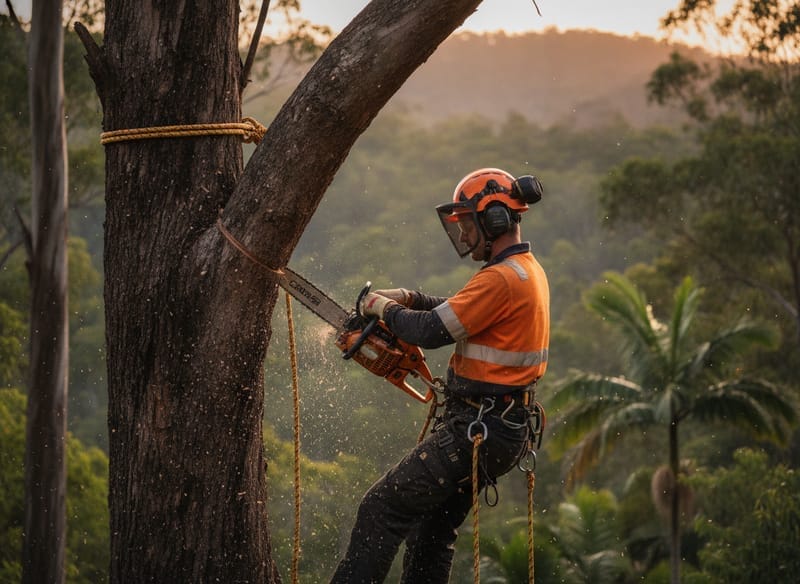
Tree work at heights carries significant risk, which is why strict compliance is non-negotiable for our team. Every reduction or canopy management job we undertake is carried out in strict accordance with AS4373 — Pruning of Amenity Trees.
Our on-site crews are led by AQF Level 3 qualified arborists equipped with industry-leading climbing gear, top-handle saws, and elevated work platforms where access allows. For your total protection, Hills District Arborist carries Public Liability insurance and comprehensive WorkCover for all our staff. We never take shortcuts with your property or our safety.
Working in this region requires deep local knowledge. Properties in Albany Creek and the wider Hills District often fall under the City of Moreton Bay planning scheme, which can include specific vegetation management protections, bushfire overlays, and Koala Habitat Areas.
Our team knows exactly which local species—like towering hoop pines, massive flooded gums, or protected Moreton Bay figs—require careful management or council approval before heavy canopy reduction can commence. We also understand the local terrain. Many properties feature steep slopes or narrow access gates where traditional machinery simply cannot fit. In these cases, our advanced rope-access climbing techniques are essential. Furthermore, with the intense subtropical storm seasons we experience here, strategic canopy thinning is one of the best investments you can make to protect your home from sudden wind throw and saturated soil failures.
After we complete your canopy reduction work, the tree will enter a recovery phase. We recommend providing a slow, deep watering at the base during dry weeks to reduce transplant-like stress and support healthy healing at the cut sites. If you have chosen to keep the fresh mulch we processed on-site, spread it over the root zone (keeping it clear of the immediate trunk collar) to lock in soil moisture. Keep an eye on the canopy over the next 12 to 18 months. If you notice any unusual dieback, or if it is a fast-growing species that needs regular clearance from your roofline, reach out to our team to schedule routine maintenance.
Pricing depends on whether we are performing a complex reduction or a complete removal.
We give you clear, honest options and fixed quotes—no sales pressure.
We manage canopies safely across the entire local region.
Call the qualified experts for a safer, healthier alternative that protects your property.
Get a Free Quote