Controlled Regrowth
Proper reduction cuts encourage stable, healthy regrowth rather than the weak, hazardous epicormic shoots caused by lopping.
Professional height reduction and canopy management for overgrown trees, focused on long-term safety and structure.
Serving Bunya acreage properties and the broader Hills District.
If a tree has outgrown its space on your Bunya property, we provide arborist-approved reduction methods rather than harmful lopping.
Many older Bunya properties feature exotic plantings or fast-growing native screens that have become unmanageable. We manage these canopies safely, keeping them out of powerlines and away from homes.
Proper reduction cuts encourage stable, healthy regrowth rather than the weak, hazardous epicormic shoots caused by lopping.
Careful canopy management opens up your property without destroying the visual appeal of your trees.
Keep heavy branches away from your roof, gutters, and boundaries, significantly reducing storm damage risk.
We visit your property to understand why you need the tree lopped (e.g., shade, danger, clearance).
We explain the best AS4373-compliant method to achieve your goal, or recommend removal if the tree is unsuited to the space.
Our climbers perform targeted reductions, dropping limbs safely to the ground.
All branches and foliage are chipped and cleared away, leaving your site tidy.
When acreage properties and suburban blocks need expert canopy management, our team delivers professional Tree Lopping Bunya property owners can trust. Often, homeowners ask for "lopping" when they really mean they want a tree made smaller, safer, or less intrusive. Whether you are dealing with an overgrown flooded gum shading your solar panels or a towering hoop pine dropping debris over your roof, we have the skills to manage it properly.
Living in Bunya means enjoying established bushland character, but our subtropical climate and fierce summer storms mean large trees need active management. Our local climbing arborists understand how to reduce risk while preserving the health of your trees. We don't just hack branches back to ugly stubs; we use precise, AS4373-compliant techniques to reduce canopy size, improve wind filtration, and keep your property safe without destroying your landscape's natural appeal.
The term "lopping" is widely used by the public, but in the professional arboriculture world, true lopping—or topping—is a damaging practice. Indiscriminately hacking the top off a mature blackbutt or brush box leaves massive open wounds that invite disease, decay, and pest infestation. Worse still, trees respond to aggressive topping by panic-growing "epicormic" shoots. These fast-growing new branches are weakly attached and highly prone to snapping off in the next severe Hills District storm, turning a perceived safety fix into a genuine hazard. When you hire us for tree lopping, our qualified arborists provide a long-term solution. Instead of topping, we perform targeted crown reduction and selective pruning in strict accordance with AS4373 (Pruning of Amenity Trees). This standard ensures every cut is made at the correct branch collar, allowing the tree to heal naturally. Our approach gives you the outcome you actually want—a smaller, safer, more manageable tree with better clearance—without triggering explosive, dangerous regrowth. We assess the structure of your specific trees, determine the maximum safe canopy reduction (typically no more than 25-30% in a single prune), and use advanced rope-access techniques to dismantle target branches safely, protecting your home and gardens below.
When clients ask for tree lopping, we deliver professional canopy management. Here are the specific techniques our climbing arborists use to achieve your goals safely.
The correct alternative to topping. We selectively reduce the overall height and spread of the canopy by cutting branches back to appropriate lateral growth points. This makes the tree smaller while maintaining its natural shape and structural integrity.
Often requested when low-hanging branches block driveways, obscure sightlines, or interfere with pedestrian access. We carefully remove lower branches to raise the canopy base, providing the necessary vertical clearance without stressing the tree.
If your goal is to let more winter sunlight into your home or reduce wind resistance during storm season, we selectively remove secondary branches throughout the canopy. This retains the tree's size but reduces overall branch density.
Targeted removal of specific problematic branches. Whether a limb is overhanging your roofline, rubbing against powerlines, or stretching dangerously over a boundary, we remove the exact limbs causing the issue.
The systematic removal of dead, diseased, or dying branches before they can fall. This is critical for large species like flooded gums and Moreton Bay figs, improving safety directly above targets like houses and entertaining areas.
Delivering safe and effective canopy reductions requires a meticulous, systematic approach. Here is exactly how our team operates on your property.
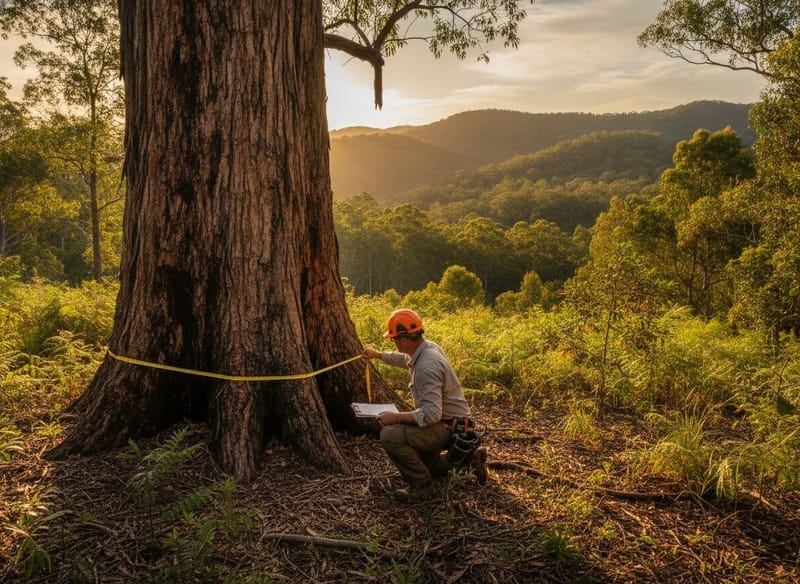
First, we conduct a comprehensive on-site assessment. One of our qualified arborists will inspect the tree, listen to your concerns, and advise on the best AS4373-compliant method. We also check for City of Moreton Bay overlay restrictions, such as Koala Habitat Areas or significant tree protections, ensuring our proposed work is fully compliant with local laws.
Once you approve our detailed, fixed-price quote, our crew arrives in our clearly marked trucks. We establish a secure work zone, mapping out safe drop zones even on tight or steep acreage blocks.
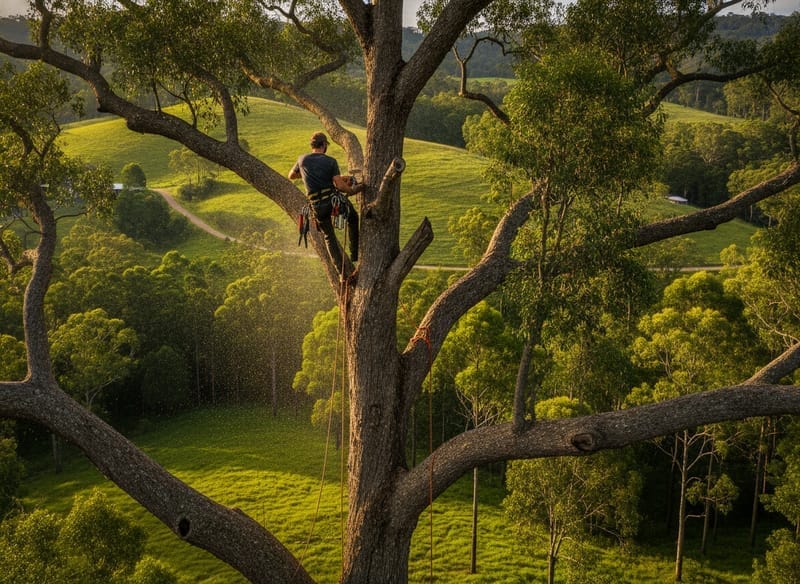
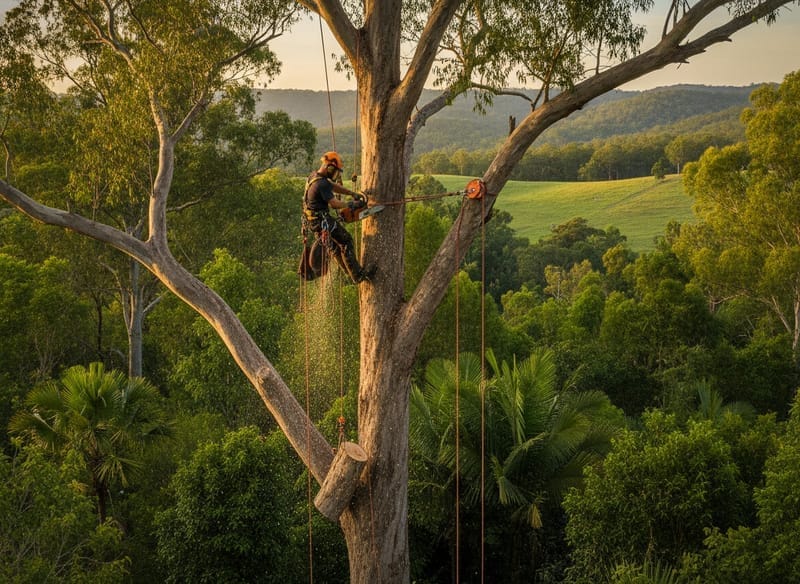
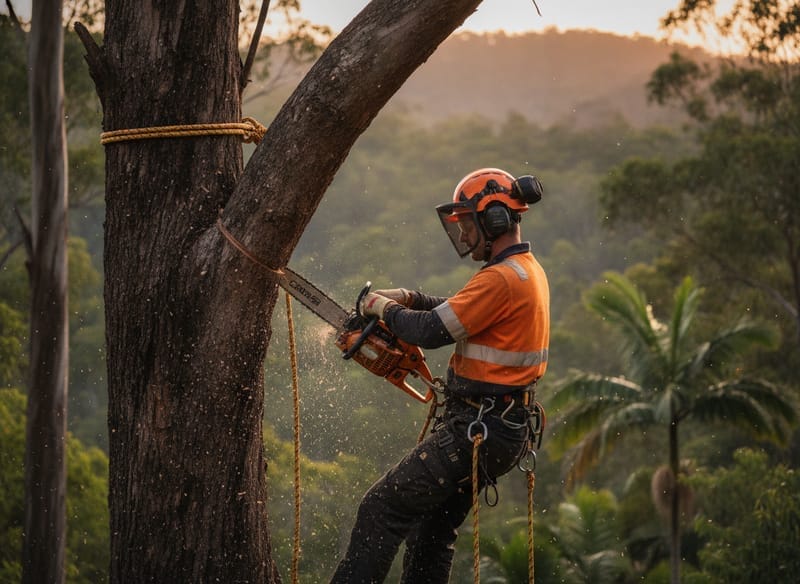
Our AQF Level 3 climbers then access the canopy using advanced rope-and-harness techniques or our specialised spider lifts. We execute the required cuts with top-handle climbing saws, rigging heavy limbs down slowly with ropes to prevent damage to your gardens, fences, or outbuildings.
Finally, we process all the removed branches through our heavy-duty wood chippers. We can leave the premium mulch on-site for your garden or haul it away in our tipper trucks. Before we leave, we perform a thorough rake and clean-up, leaving your property immaculate.
Every job we undertake is guided by AS4373 (Pruning of Amenity Trees) and, where development applications are involved, AS4970 (Protection of Trees on Development Sites). We never compromise on safety or compliance.
Our hands-on climbing team holds AQF Level 3 Certificates in Arboriculture, while our consulting arborists hold AQF Level 5 qualifications for formal reports. We are fully covered by a Public Liability insurance policy and comprehensive WorkCover for all employees.
Whether we are managing traffic on a narrow Hills District road or setting up rigging equipment over a glass conservatory, our crew maintains strict safe work method statements. You are dealing with highly trained professionals, not backyard operators.
Bunya is defined by its beautiful acreage properties, rolling terrain, and rich subtropical vegetation. However, managing trees here requires specific local knowledge. The City of Moreton Bay enforces strict planning schemes, and many properties fall under vegetation protection or bushfire hazard overlays.
When executing Tree Lopping Bunya projects, our team frequently works with the large species common to the area. We know how to safely manage towering hoop pines that have outgrown their space, and we regularly perform hazard-reduction pruning on flooded gums and bunya pines to prepare properties for the summer storm season and heavy cone drops.
The undulating terrain and narrow access tracks typical of Bunya acreages also mean heavy elevated work platforms (EWPs) aren't always viable. Our reliance on elite rope-access climbing means we can reach and safely reduce canopies on steep blocks and deep gullies where machinery simply cannot go.
Once we have completed the reduction work, your tree will need a little time to recover. If we have left mulch on-site, apply a 75mm layer around the base of the tree (keeping it clear of the trunk) to retain moisture and improve soil health. Properly pruned trees won't require immediate follow-up, but we recommend an annual visual inspection, particularly before the Queensland storm season hits in October. Keep an eye out for any sudden dieback or unusual fungal growth on the trunk. If you notice deadwood developing or if a severe weather event causes damage, call our arborist team straight back for a safety assessment.
Costs for canopy reduction depend on the size of the tree and site access.
Call us for a free quote. We’ll provide a practical, fixed-price solution for your overgrown trees.
Providing professional canopy management across the Hills District.
Contact our Bunya arborists for safe, professional canopy reduction alternatives to lopping.
Get a Free Assessment