Restore Order
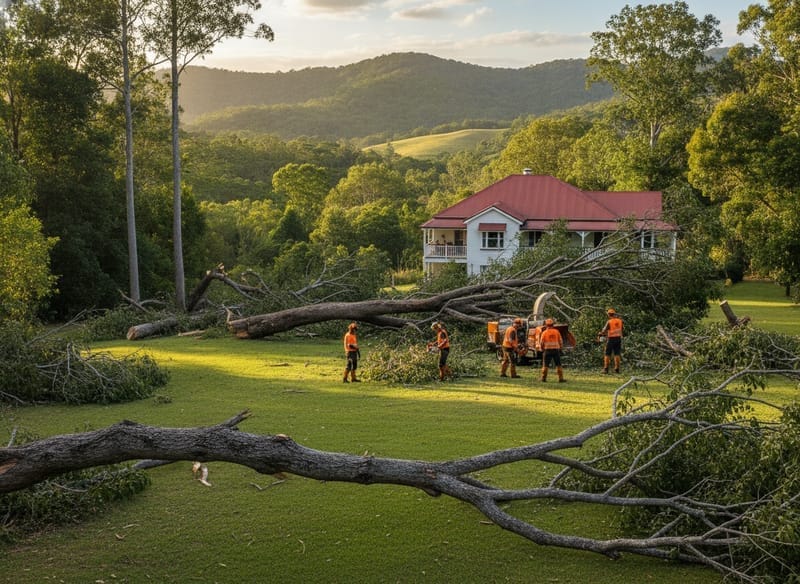
Turn a chaotic, debris-covered block back into a clean, usable acreage.
Comprehensive post-storm cleanup for acreage properties hit by severe weather.
Servicing Cashmere properties after severe weather events.
Our Storm Damage Tree Removal Cashmere service goes beyond immediate emergencies. We handle the extensive cleanup required to return your property to normal.
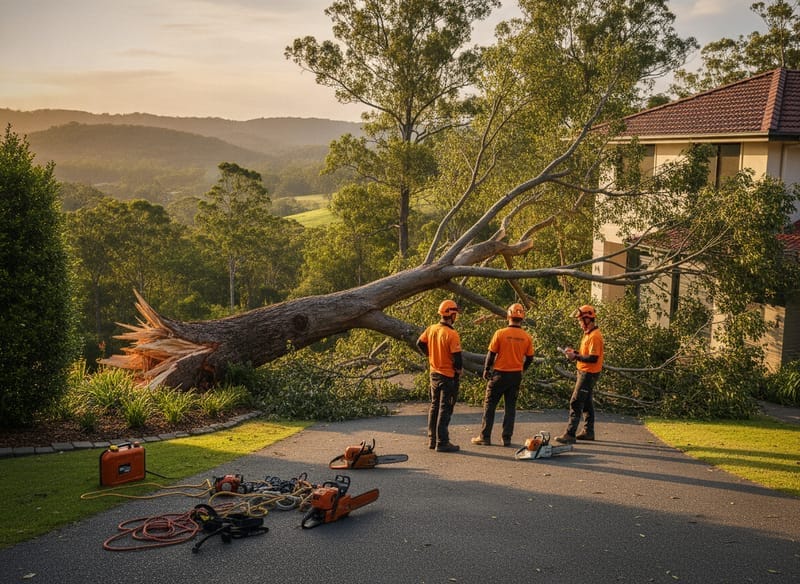
Storm cells rolling off the D'Aguilar Range frequently hit Cashmere with high winds, snapping the tops off tall open eucalypts and leaving dangerous 'widow-makers' hung up in the canopy.
Turn a chaotic, debris-covered block back into a clean, usable acreage.
Removing broken limbs now prevents them from falling unpredictably weeks later.
We handle all the heavy lifting and disposal so you can focus on property repairs.
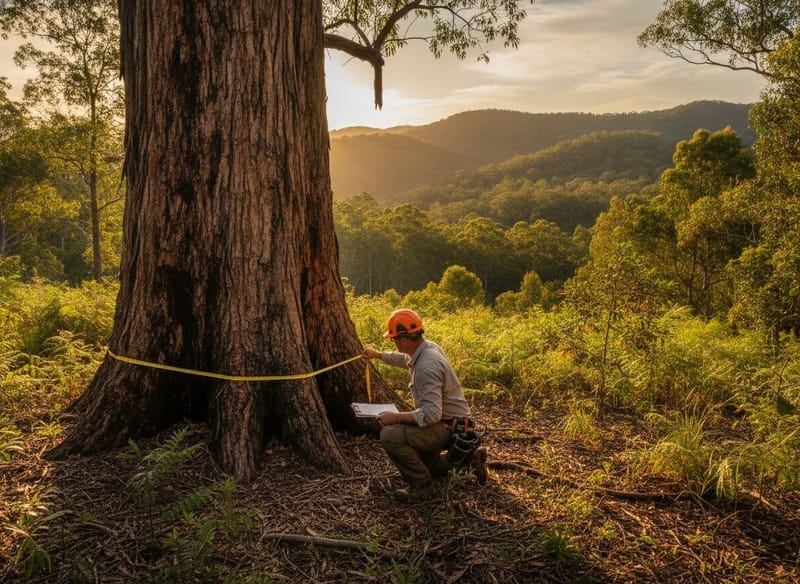
We walk the property to catalog fallen timber and identify dangerous hung-up branches.
We quote the job, prioritizing hazards over fences and structures first.
Using EWPs and loaders, we systematically prune, cut, and process the damaged timber.
All debris is chipped. We can leave the mulch for your acreage recovery or cart it away.
When severe weather strikes the Hills District, the aftermath can be devastating for acreage and residential blocks. From snapped branches blocking driveways to massive root-plate failures, requiring immediate Storm Damage Tree Removal Cashmere property owners can rely on is a reality of our subtropical climate. Our team at Hills District Arborist has seen firsthand how quickly summer supercells, ex-tropical cyclones, and high-wind events can compromise large established trees across the region. Whether you manage a sprawling residential property, a steep hinterland block, or a commercial site, leaving hung-up branches or unstable trunks overhead poses a severe risk to life and property. We provide rapid-response tree removal and make-safe triage services designed to protect your home, restore safe access, and prevent any secondary damage from occurring. Leveraging specialized climbing gear and heavy machinery, our experienced arborists safely dismantle and remove hazardous timber, ensuring your property is completely secure before the next storm system rolls in.
Dealing with fallen, splintered, or fractured timber is incredibly dangerous work. Under immense tension, a snapped flooded gum or a heavily leaning hoop pine can react violently and unpredictably when cut. Relying on an under-qualified handyman or attempting DIY storm cleanup often leads to serious injury, equipment damage, or catastrophic secondary property damage. Chainsaws kicking back on compression wood and large trunks barber-chairing are harsh, everyday realities of post-storm tree work that require extensive training to manage.
Furthermore, unskilled operators often resort to aggressively topping damaged trees to clear the mess quickly. This violates AS4373 pruning standards, leaves massive decay-prone stubs, creates weak epicormic regrowth, and ultimately guarantees the tree will fail again in the next major weather event.
The solution is bringing in qualified AQF Level 3 climbing arborists who deeply understand tree biomechanics and tension-and-compression cutting techniques. Our team comprehensively assesses the structural integrity of every damaged tree before we ever start a chainsaw. If a heavy limb has smashed through a roof or a root-plate has partially failed in saturated soil, we systematically dismantle the hazard using advanced rigging, elevated work platforms, or crane-assisted lifts. We do not just hack away at the wreckage; we perform calculated, highly controlled cuts to safely remove the debris while preserving the long-term health and stability of any salvageable trees remaining on your property.
Safe and highly efficient storm damage recovery requires specialized equipment and advanced rigging techniques. Here is exactly how our arborists handle dangerous post-storm tree hazards on your property.
We meticulously tag trees by priority: imminent hazards over structures or power lines, secondary hazards like hung-up limbs, and general ground cleanup. This triage ensures emergency threats are neutralized first.
Fallen or lodged timber stores massive amounts of kinetic energy. We utilize specialized compression and tension cuts to prevent timber from barber-chairing, snapping back, or shifting unpredictably during the dismantling process.
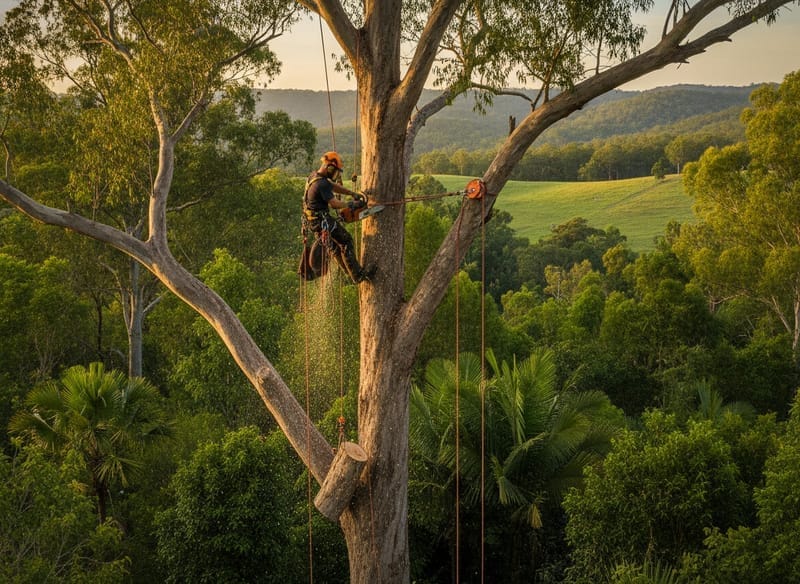
On steep Cashmere blocks where elevating work platforms (EWPs) simply cannot reach, we deploy our AQF Level 3 climbers. Using single and double-rope techniques, we safely access and dismantle hung-up branches directly from within the canopy.
When massive failed root-plates or entire heritage trees crash onto houses, we coordinate loader cranes or heavy slewing cranes. This allows us to lift multi-ton timber sections vertically off the compromised structure with zero additional impact.
We break down massive hardwood logs using high-powered chainsaws like the MS500i and 572XP. All canopy debris is processed through our 12-inch commercial wood chippers to rapidly restore your site's safety and appearance.
When you contact our team for emergency storm recovery, we initiate a rapid, highly structured response tailored to the specific severity of your property's situation. First, we conduct an urgent on-site triage assessment. We walk your entire block to categorize hazards, prioritizing immediate threats like massive hoop pines leaning precariously over rooflines or heavy flooded gum branches completely blocking your driveway access. Next, we provide a detailed, itemized quote. This breakdown is highly critical, as it clearly outlines the precise cost for addressing each individual tree and is formatted perfectly for direct, hassle-free submission to your insurance provider. Once approved, our crews deploy. For urgent make-safe operations, we focus purely on removing the immediate threat to life, structures, and critical infrastructure. Following the make-safe phase, we transition to the primary removal and cleanup phase. Utilizing our fleet of bucket trucks, tight-access spider lifts, and advanced rope-access climbing techniques, our arborists carefully and systematically dismantle the remaining damaged timber. Ground crews expertly manage the drop zones and process the limbs through our high-capacity chippers. Finally, we conduct a thorough site cleanup, loading the heavy hardwood logs onto our tipper trucks and ensuring your property is completely free of hazardous debris.
Safety and strict industry compliance are at the absolute core of our post-storm operations. Our arborists hold AQF Level 3 climbing and AQF Level 5 consulting qualifications, ensuring all cleanup and selective pruning work aligns flawlessly with AS4373 (Pruning of Amenity Trees). If your storm damage triggers council replanting obligations or impacts a new development zone, we operate strictly under AS4970 guidelines for tree protection. For your complete peace of mind, we carry comprehensive Public Liability insurance and mandatory WorkCover for our entire team. We also meticulously document the site with before-and-after photos and provide highly detailed, itemized arboricultural reports to streamline your insurance claims.
Executing safe Storm Damage Tree Removal Cashmere locals trust requires deep, specialized knowledge of the local environment. The suburb's expansive acreage blocks, steep densely vegetated gullies, and narrow access roads often mean that heavy machinery like cherry pickers cannot easily reach fallen trees. In these challenging hinterland scenarios, our elite rope-access climbers are absolutely essential.
Cashmere is heavily populated with massive local species like flooded gums, brush box, and towering legacy hoop pines. These species are highly prone to sudden branch-shedding and catastrophic root-plate failure when our saturated subtropical wet season combines with severe high-wind events. Furthermore, properties falling under the City of Moreton Bay planning scheme must meticulously adhere to specific Koala Habitat Area overlays and local Vegetation Management regulations. Even after a destructive storm, completely removing certain native trees may still require formal council notification or an emergency arborist report. We seamlessly handle these complex compliance steps for you, alongside proactively managing the Asset Protection Zones (APZs) that are critical for acreage properties with active bushfire overlays.
Once the immediate storm hazards are safely cleared from your property, proactive maintenance is vital to protect the health of your remaining canopy. We strongly recommend leaving the fresh, high-quality mulch we generate on-site to help retain critical soil moisture and support the compromised root systems of your surviving trees. Keep a very close eye on any trees that experienced minor wind stress during the storm. Look out for newly weeping sap, fungal growth on impact wounds, or subtle changes in the soil lifting around the base, which can strongly indicate hidden root-plate shifting. If you notice large deadwood appearing or epicormic shoots aggressively sprouting in the canopy in the months following a severe storm, call our team back for a follow-up AS4373-compliant assessment.
Pricing for Storm Damage Tree Removal Cashmere depends heavily on the volume of debris.
We provide comprehensive quotes for large-scale cleanups, perfectly formatted for insurance claims.
Providing extensive storm cleanup across the Hills District.
Book our heavy-duty cleanup crew to clear the debris and make your trees safe.
Get a Storm Cleanup Quote