Restore Order
Clear out the mess of a storm quickly so you can get back to normal acreage life.
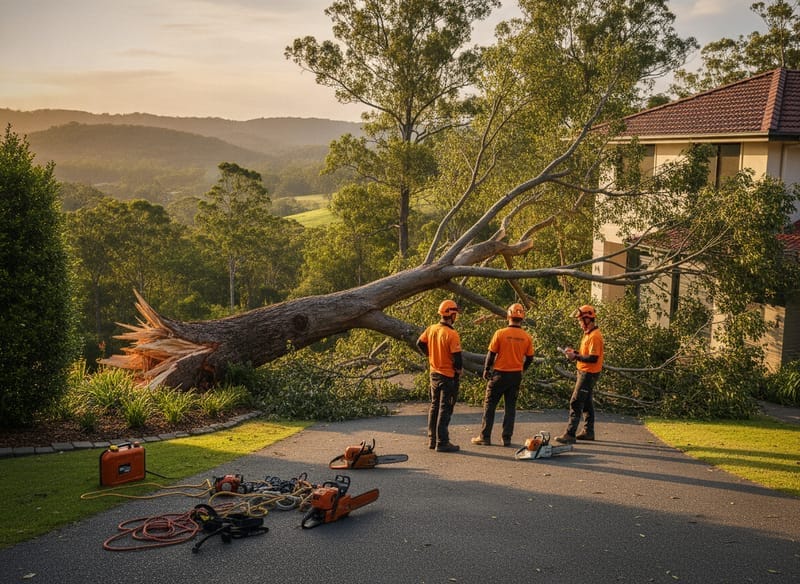
Comprehensive cleanup of fallen trees, snapped branches, and hazardous debris after severe weather hits your acreage.
Providing post-storm tree recovery across Draper and the D'Aguilar fringe.
Our Storm Damage Tree Removal Draper service provides a complete solution for getting your property back to normal after a severe weather event.
Draper's position near the D'Aguilar Range means it frequently experiences intense microbursts and lightning strikes. The tall open eucalypt forests here often shed massive limbs during these events, requiring professional, heavy-duty cleanup.
Clear out the mess of a storm quickly so you can get back to normal acreage life.
Identify and remove weakened branches that didn't fall during the storm but remain a hazard.
Clear fallen timber off your boundary fences so repairs can begin.
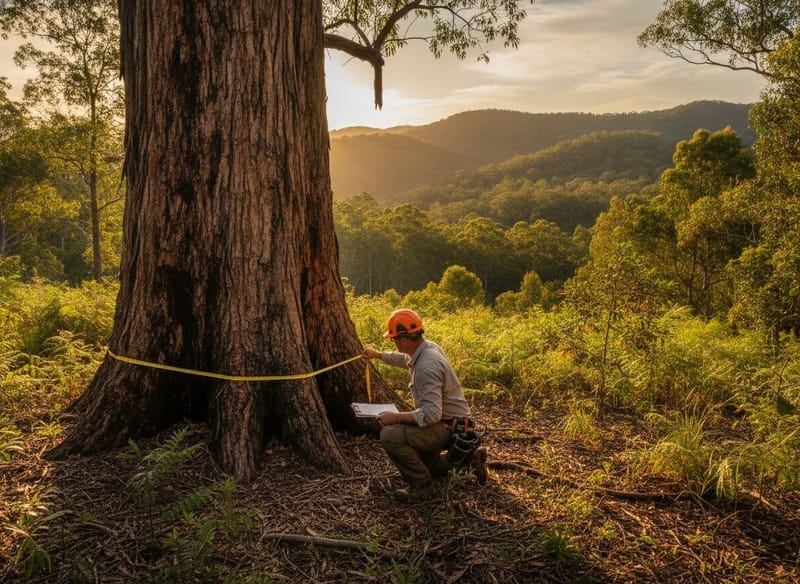
We visit your Draper property to scope the extent of the storm damage and quote the cleanup.
We tackle the most dangerous hung-up branches or blocked access ways first.
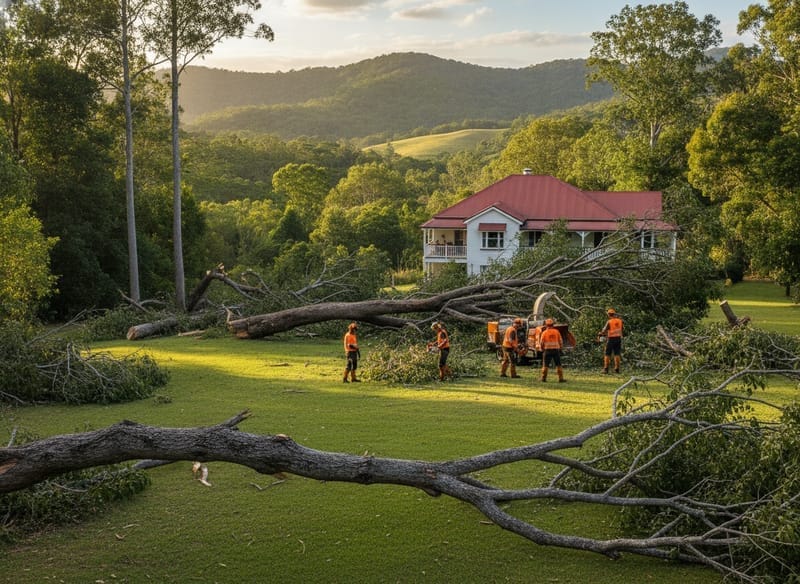
Our machinery processes the fallen timber, chipping the brush and stacking or removing logs.
We check the surrounding trees to ensure the storm hasn't left any hidden dangers behind.
Draper acreage properties take the brunt of severe summer storms that roll through the Hills District and wider Moreton Bay region. When high winds, hail, and torrential rains hit, saturated soils and heavy, water-logged canopies inevitably lead to catastrophic root-plate failures and shattered limbs. If you are facing fallen timber blocking your driveway or dangerous hung-up branches threatening your roof, you need the expert Storm Damage Tree Removal Draper residents rely on.
As the senior arborists and business owners behind Hills District Arborist, our team has seen firsthand the destruction these ex-cyclone weather events cause. When you call us, our very own trucks, chippers, and fully qualified climbing arborists arrive at your gate. We understand the urgency of storm damage, and we have the local expertise, heavy equipment, and technical skills required to get the whole tree gone safely, restoring peace of mind to your property.
After a severe weather event, desperation often leads property owners to attempt dangerous DIY cleanups or hire under-qualified operators wielding chainsaws. This is a critical mistake. Storm-damaged trees are incredibly dangerous and entirely unpredictable. Fallen trunks carry immense stored energy in the form of tension and compression wood. One wrong cut by an inexperienced operator can cause a heavy log to violently roll, snap, or "barber-chair," leading to severe injury or further catastrophic property damage.
Furthermore, many opportunist "storm chaser" loppers lack the required Public Liability insurance, proper AQF certifications, or an understanding of strict AS4373 standards. If an unqualified worker drops a hung-up hoop pine branch through your roof, you could be left footing an enormous bill, as your insurance will likely reject the claim.
Our professional arborists take a highly controlled, technical approach to tree removal. We do not just hack away at a fallen canopy; we systematically dismantle the hazard using advanced rigging, friction devices, and calculated cross-cutting. Getting the whole tree gone safely—without collateral damage—requires the seasoned, methodical expertise our local climbers and ground crew provide on every single job.
When severe weather strikes the Hills District, every tree failure requires a specialized technical response. Our climbing arborists and ground crews deploy industry-leading, AS4373-aligned methods to safely process compromised timber.
We conduct an immediate visual assessment of the compromised tree structure, identifying primary load-bearing points, widow-makers, and tension zones. We isolate the drop zone and perform initial make-safe cuts to relieve immediate pressure on structures.
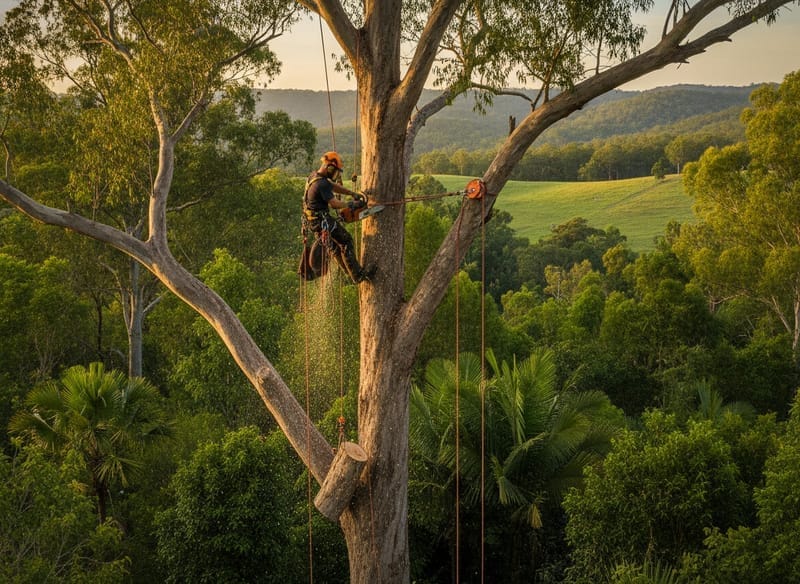
For steep acreage blocks where Elevating Work Platforms (EWPs) cannot reach, our AQF Level 3 climbers utilize advanced double-rope and single-rope access techniques. We install friction devices and lowering lines to safely guide shattered canopy sections to the ground.
When a tree is uprooted or fallen, the trunk holds extreme kinetic energy. Our ground operators use professional high-cc chainsaws (like the MS500i or 572XP) and specific bucking techniques to safely release tension and compression wood without the log rolling or trapping the saw.
For catastrophic whole-tree failures over homes or vital access roads, we coordinate loader cranes or HIABs. This allows us to lift massive flooded gums and hoop pines vertically off your property, eliminating the risk of secondary impact damage.
We utilize high-capacity 12-inch wood chippers and mini-loaders to process all fallen foliage and branches into manageable mulch on-site. The remaining heavy timber is securely loaded into our tipper trucks for off-site removal, leaving your block clean.
We have refined our emergency response to be as seamless and stress-free as possible, delivering the most reliable Storm Damage Tree Removal Draper has to offer. When you call Hills District Arborist, our first step is immediate triage. Our AQF-qualified arborists assess your site, identifying immediate hazards like widow-makers or whole trees leaning heavily toward your home, stables, or driveway. Next, we provide a detailed, itemized quote, complete with pre-work photographs and documentation that you can submit directly to your insurance provider for seamless claims processing. Once approved, our crew moves swiftly into the make-safe phase. We prioritize securing the immediate danger, establishing safe exclusion zones, and carefully lowering hung-up limbs using rated rigging gear. After the site is stabilized, our climbers and ground crew systematically dismantle the remaining structure, extracting the timber safely. Finally, our machinery operators utilize skid steers and high-capacity wood chippers to process all the green waste. We remove the heavy logs, mulch the canopy, and rake the drop zone entirely clean, ensuring your acreage is safe, tidy, and accessible once again.
Performing tree removals in the wake of a severe storm is high-risk work that demands strict adherence to Australian safety protocols. Our crew operates in full alignment with AS4373 (Pruning of Amenity Trees) and AS4970 (Protection of Trees on Development Sites) whenever dealing with retained surrounding vegetation.
Every climber on our team holds an AQF Level 3 in Arboriculture as an absolute minimum. To protect your property and our staff, we carry Public Liability insurance alongside comprehensive WorkCover. When working near Draper's roadside reserves or managing large-scale clearings, we also deploy licensed traffic management and follow all required occupational health and safety guidelines.
Operating in Draper and the surrounding Hills District requires highly specific local knowledge. The topography here features steep slopes, winding unsealed driveways, and deep gully blocks that heavy cherry pickers simply cannot access. When the summer storm season saturates our soft, volcanic-derived soils, massive local species like hoop pines, bunya pines, flooded gums, and Moreton Bay figs are extremely susceptible to sudden root-plate failure.
Because vehicle access is often restricted, our team heavily relies on advanced rope-access climbing techniques to dismantle storm-wrecked canopies safely. We are also deeply familiar with the City of Moreton Bay planning scheme. While emergency make-safe works are generally exempt from standard application processes, dealing with damaged trees in mapped Koala Habitat Areas or specific Vegetation Management Overlays requires an experienced arborist to formally document the failure. We ensure all emergency works are fully compliant with local environmental protections, saving you from potential council fines.
Once the immediate hazard is cleared and the damaged tree has been safely removed, your Draper acreage still requires careful monitoring. Extreme high-wind events can cause delayed stress responses in surviving trees. It is incredibly common for large eucalypts, such as blackbutts or flooded gums, to experience sudden limb shed weeks after the initial storm has passed. We highly recommend having our AQF Level 5 consulting arborist return to conduct a thorough post-storm hazard assessment of your remaining canopy. To support your garden's recovery, the premium mulch we process on-site can be spread over your garden beds. This insulates the soil and protects the Structural Root Zones of your surviving trees. If you plan to replant, we can advise on wind-resistant native species suitable for Draper's microclimate and specific bushfire overlay requirements.
Post-storm cleanup costs in Draper vary based on the volume of debris and the complexity of the extraction.
Contact us for a prompt, transparent quote to handle all your Storm Damage Tree Removal Draper needs.
We provide dedicated storm cleanup services throughout the Hills District acreage belt.
Call Hills District Arborist for fast, professional storm damage cleanup and tree removal.
Get a Free Quote